Blues in a Blender Found the Tree
Bringing in the new year, with a new look at the same groove
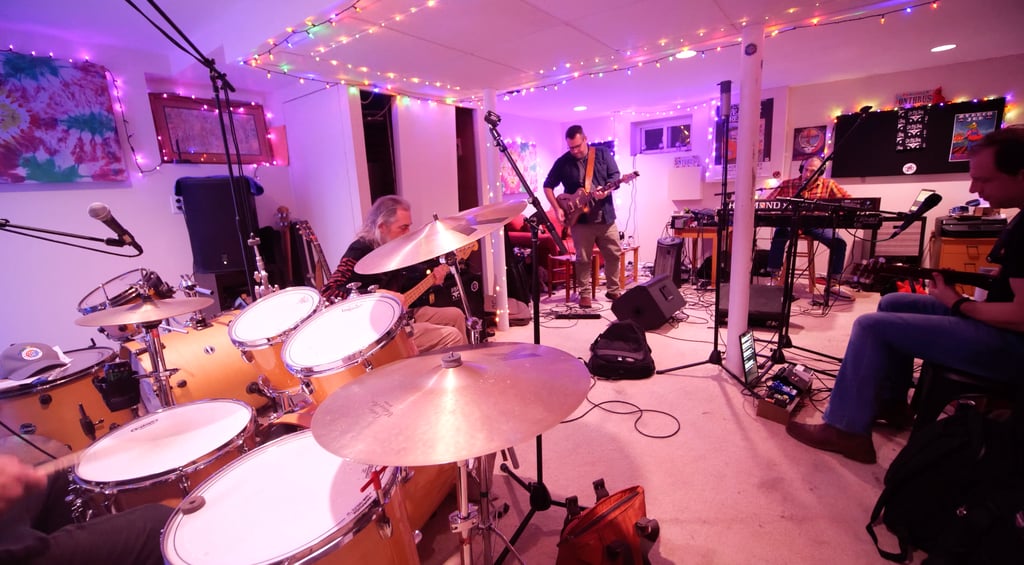
Blues in a Blender
12/22/20253 min read
Bands like this don’t start as a product. They start as a weather system.
Somebody knows a drummer. Somebody’s free on Friday. Somebody brings a song that shouldn’t work and somehow does. The early Blues in a Blender years were exactly that: a pickup game with good players, bad lighting, and the occasional night where the room got quiet because everyone could feel the groove lock in.
The pickup game era is romantic until you live in it. Then it’s just logistics and guesswork with a backbeat.
So the band did what most bands eventually have to do if they want to be more than a lucky night: they stopped treating lineup as a rotating door and started treating it like an instrument. The phrase in the BIAB universe is “barking up the correct tree,” a Baronhead-ism that sounds like a joke until you realize it’s also the whole job.
Now they’ve found the tree.
And the change isn’t “we’re going pro.” It’s simpler. It’s less Instagram, more discipline: rehearsals that happen even when nobody feels like it, vocals that don’t get waved off as ‘good enough,’ arrangements that don’t rely on adrenaline, and dynamics that actually mean something.
Because “high standard” in a regional band isn’t a slogan. It’s unglamorous. It’s deciding that the quiet part should still feel loud. It’s caring how the guitar sits against the keys. It’s ending a song like you meant to end it, not like you ran out of runway.
A big part of that is sound. The band’s been talking about in-ears—not because anyone wants to look like a pop act, but because they’re tired of letting a random wedge mix decide what the band is on any given night. In-ears are basically a tiny rebellion: a way to make the same band show up in different rooms. More control. Less chaos. More intention.
And in a band that lives on feel, control isn’t the enemy of soul. It’s what lets soul survive.
This isn’t a “leader” story, either. BIAB runs like a family machine: different people carrying different weight. Rich shapes the sound. Matt handles the online/tech/video brain that turns rehearsals into usable proof. Aaron brings material and song choices that keep the set from becoming a comfort-food loop. Majority rules when it needs to. The point is that nobody’s dragging the band up a hill alone.
That matters, because the DMV doesn’t need another band that can play. The region is full of musicians with chops. The gap is identity—bands that sound like themselves at 9:15 and still sound like themselves at 11:40, when the room gets loud and the easy thing would be to brute-force the set.
The new BIAB identity is starting to show most clearly in the originals, especially “Hard Times.” It’s been around long enough to stop feeling like “the original” and start feeling like part of the band’s bloodstream. The arrangement—the real one, the one that works—didn’t come from a spreadsheet. It came from a gig. The band caught it in the wild on video, and that performance became the blueprint. The plan now is to record it without sanding the corners off: keep the live-born architecture, just make it hit with studio weight.
That’s a subtle flex, and it’s the right kind. A lot of bands write songs and then try to figure out how to perform them. BIAB’s doing it the other way: build it in front of people, then document the version that actually lives.
There are other originals “in the kettle,” too—half-formed, promising, still being argued into shape the way good songs usually are. And there’s also a cover they’re refusing to name, which is the most healthy thing a band can do in 2025. The hints are annoying on purpose: Meters-inspired, the band behind it is obvious, and the setting might be a rooftop—because sometimes you’ve got to remind yourself that this is supposed to feel like trouble, not homework.
If the pickup-game years were about possibility, this era is about repeatability. The goal isn’t to get sterile. The goal is to get reliable enough that the band can take real chances again—because you can’t jump without a floor.
Blues in a Blender isn’t “reforming.” It’s doing the more interesting thing: becoming itself on purpose—in public, in rehearsal, on tape, and eventually on vinyl, where music still feels like something you can hand to a person and watch them keep for generations to come. And if all this